How to attack melon aphids

Just when my melons start to take off, these little a-holes show up. And it won’t be long before their a-hole friends, ants, show up too. So, what’s the deal with melon aphids and are they cause for concern? Let’s break it down.
What are melon aphids?
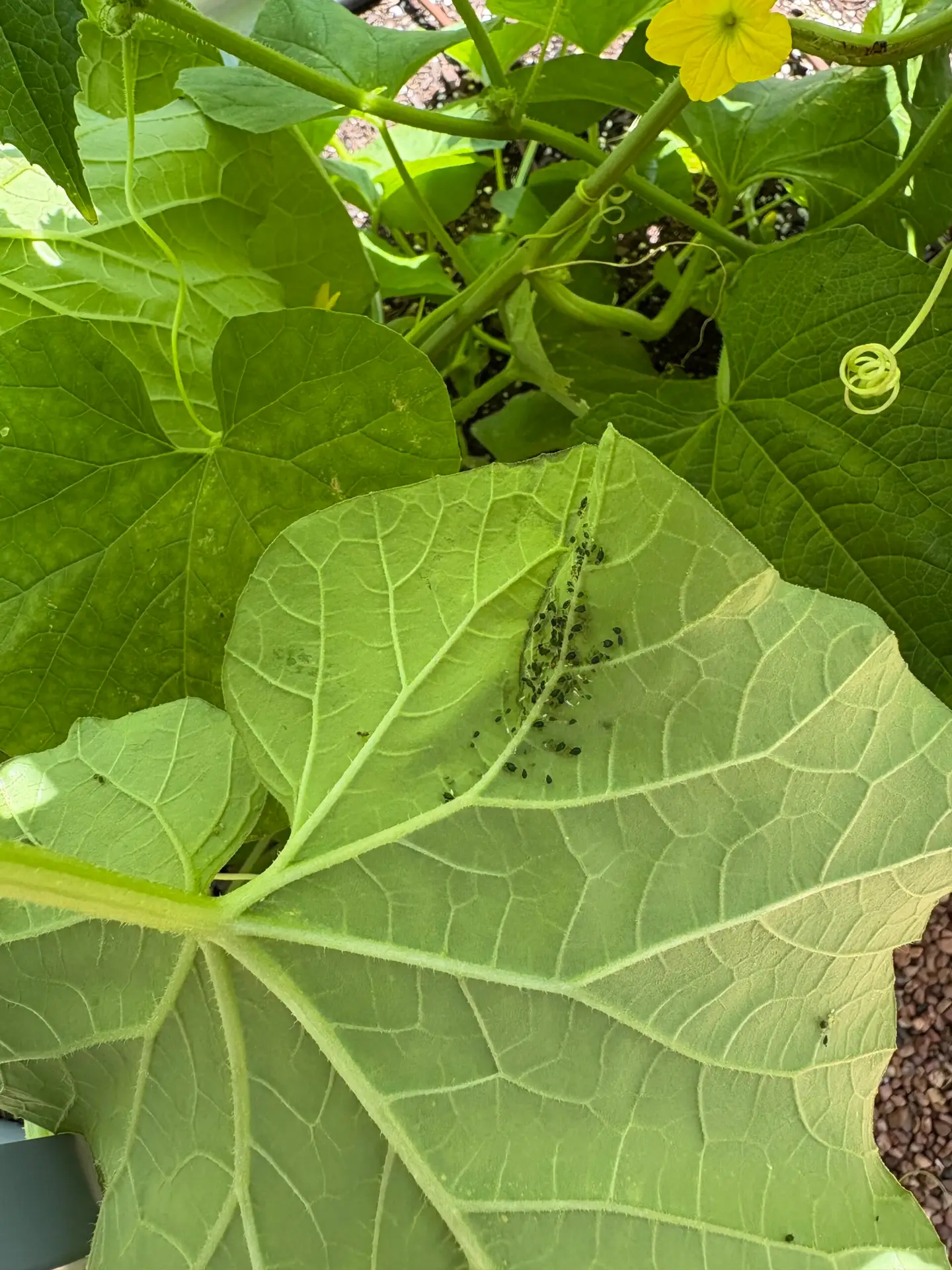
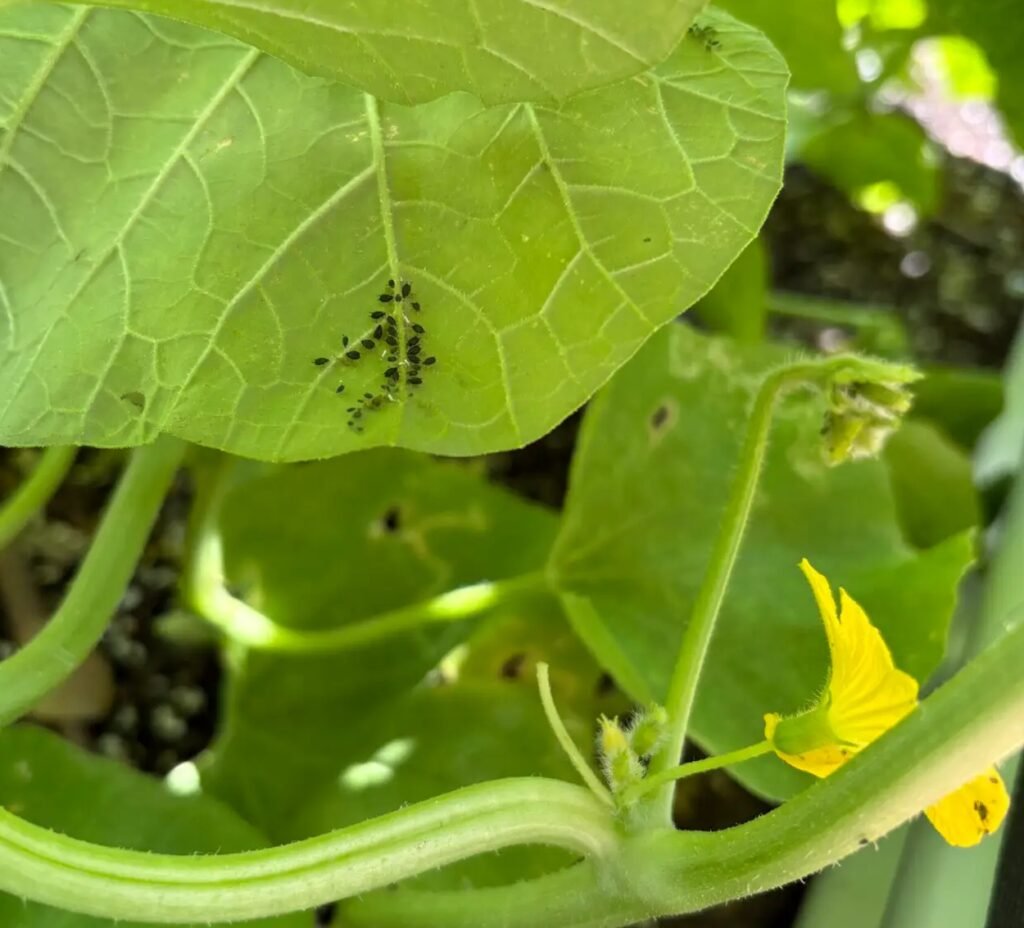
Melon aphids—or cotton aphids as they’re also known—are tiny insects that come in a variety of colors, from yellow-green to nearly black. They can be winged or wingless and couldn’t care less about hot temperatures. When they’re not busy chomping on your cucurbits, they may help themselves to your favorite citrus plant, too. And as we all know well, they love to hide on the underside of leaves, partying with their colony.
Melon aphids are a sticky situation.
What you might now know, however, is that after feeding on the sap of your plant, melon aphids produce a sticky substance called honeydew. Over time, the honeydew coats the leaves and surrounding surfaces. Unfortunately, it’s also the perfect breeding ground for sooty mold, a black fungus. Once that forms, the plant’s ability to photosynthesize is compromised.
Oh, and then there’s the ants.
At some point, the ants come marching in because they love a good honeydew buffet. Like a crooked crime family, they strike a deal with the aphids, offering protection from predators like ladybugs in exchange for that sticky stuff. In turn, the aphid population increases and so too do our problems. Gee, thanks guys.
But that’s not the only reason to worry.
The infestation will start to distort your plant’s leaves. You may begin noticing curling or yellowish discoloration as a result. But the cosmetic damage is really just the tip of the iceberg, because aphids can also transmit a number of devastating diseases, like cucumber mosaic virus, zucchini yellow mosaic virus, and watermelon mosaic virus.
So, here’s how to win the battle:
1.) Spray aphids with a hose.
Set your nozzle to the most powerful jet spray that won’t hurt your plant, then blast those suckers off the leaf. It’s instantly gratifying.
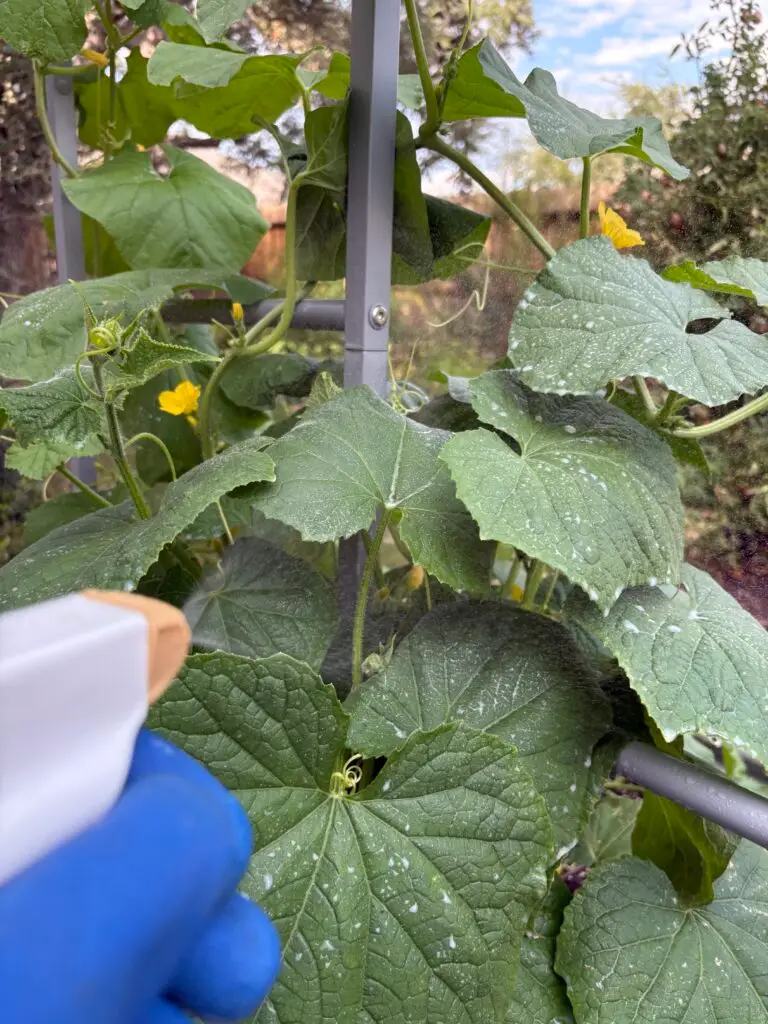
2.) Treat the plant with neem oil or insecticidal soap.
Spray any affected areas that remain with insecticidal soap or neem oil. Both insecticidal soap and neem oil kill on contact, but neem oil also acts as a repellant. Plus, neem oil offers some antifungal benefits, so if you happen to have both, reach for the neem oil.
I try to always keep a bottle of ready-to-spray solution for each of these on hand so I have a convenient treatment option available when I spot a problem. I’ve linked two great OMRI-listed options above that are suitable for organic gardening.
3.) Try metallic mulch.
So, what’s the downside? Well, metallic mulch isn’t the cheapest. And it does give baked potato vibes. But if you’re constantly doing battle with aphids, squash vine borers, or cucumber beetles, the tradeoff is probably worth it.
4.) Yank any plants that are too far gone. 😥
As heartbreaking as it is, sometimes you just need to call it. If you have a plant that’s suffering—especially if others around it are as of yet unbothered— yank it. It’s not worth the risk of potentially losing your other healthy plants, too.
And remember… As with any plant that may be diseased, make sure you toss it in the trash—never the compost pile—to prevent tainting your soil in the future.